
The conversation around underrated Australian films tends to settle on the same consoling explanation: audiences didn’t find them. It’s a forgiving framing. It puts the problem in the past, in the audience’s hands, and leaves nobody to hold accountable for what is a structural failure. A distribution and exhibition system built around blockbuster events and six-month release windows has no obvious slot for a mid-budget Australian drama, a regional thriller, or a character study that won’t compress into a single pitch sentence. Nobody missed these films. A system made them difficult to find, and that distinction matters, because it changes what you should want fixed. The films below are worth your time. The question worth sitting with is why finding them required this much effort.
The structural problem

The multiplex is not neutral ground. Village Cinemas, Hoyts, and Event Hospitality run on the same calculus: a blockbuster fills 400 seats across eight sessions a day; a mid-budget Australian drama fills the same theatre twice if it’s lucky. The economics don’t require a conspiracy. They require a spreadsheet with no column for critical distinction.
Screen Australia’s annual box office reports show Australian films claiming under five percent of domestic ticket sales most years, not because audiences rejected them, but because most never reached a screen in a form that allowed rejection. A film that opens in Sydney and Melbourne for a fortnight, reviewed by outlets that cover national markets from those two cities, gets filed as minor before Brisbane or Hobart has had a chance to decide.
Streaming compounds the problem. Rights for Australian titles are fragmented across platforms with short licensing windows and minimal promotional budgets. A film that didn’t break through theatrically gets buried rather than surfaced. The algorithm reads the theatrical numbers and the second audience never forms.
This is the context behind any honest account of underrated Australian films. The category exists partly because finding these films requires more effort than finding an American studio release on a Friday night. These are not films that failed commercially because they were uncommercial. Several below are crowd-pleasing by any reasonable measure. They are difficult to find because the system was designed around different priorities, and the gap between what gets made and what gets seen is where you find the films worth arguing for.
Curated films
Noise (2007, dir. Matthew Saville) was recognised at the AFIs, and almost nobody saw it. Saville made a melancholy, formally rigorous film about a suburban cop whose tinnitus becomes a structural metaphor for institutional violence echoing without resolution. It is crime drama without procedural comfort, which is why it wasn’t positioned as genre entertainment and wasn’t positioned as art house. It fell between the gaps Australian distributors leave open.
Wish You Were Here (2012, dir. Kieran Darcy-Smith) is Joel Edgerton at his best and least celebrated. Four Australians go to Cambodia. One doesn’t come back. The film builds what happened through fractured chronology, returning to the same events from different angles until the moral picture shifts completely. It played Sundance in 2012 to strong notices and went out on limited release. Edgerton’s performance is as controlled and uncomfortable as anything he’s done in films with much larger marketing budgets, which is not a low bar.
The Loved Ones (2009, dir. Sean Byrne) premiered at Midnight Madness at TIFF, picked up strong international horror press, and then languished in Australian release. Horror is the genre Australian cinema most consistently makes well and most consistently undersells at home. Byrne made something genuinely unnerving with a simple setup, a high school prom night that goes wrong, and gave it real emotional weight underneath the genre mechanics. It found its audience eventually, on streaming, well after the moment when theatrical release would have mattered.
Last Cab to Darwin (2015, dir. Jeremy Sims) is the kind of film Australians claim to want: a crowd-pleasing road movie with Michael Caton, genuine warmth, properly funny, located precisely in the Australian landscape and vernacular. It made money relative to its budget. It received almost no international attention. The gap between its quality and its reach says something specific about how the export dimension of Australian film distribution operates, which is not well.
Hounds of Love (2016, dir. Ben Young) is a Western Australian thriller set in suburban Perth in 1987, and as technically accomplished as any Australian film of the decade. Young shoots familiar streets as sites of suffocation and menace without a cheap effect in sight. Emma Booth and Stephen Curry give performances that hold the film’s considerable darkness in check. It screened at Edinburgh International Film Festival before finding Australian audiences, a pattern repeated often enough in Australian cinema to warrant naming: films that travel outward for credibility before the domestic industry takes them seriously.
Oranges and Sunshine (2010, dir. Jim Loach) is not a film that lacked visibility in the way the others here did. It had Emily Watson, a recognisable British director, and a subject, the forced migration of British children to Australia, with genuine historical weight. It deserved a serious national conversation in both countries and received a limited one in neither. Loach made a good film about something Australians have not finished reckoning with, and the discomfort of the subject is why its marketing never quite found a register it could commit to.
These are not obscure choices made to signal taste. Among the underrated Australian films worth your time, these are the ones where the gap between quality and audience is hardest to explain on any ground but structural failure.
— New Wave and Ozploitation (2-3 films)
The Australian New Wave and its scrappier cousin Ozploitation share more than a decade. They also share a reception problem. International distributors dismissed both as too parochial or too disreputable, and both currents produced work worth hunting down.
Peter Weir’s debut, The Cars That Ate Paris (1974), is the film that explains how the Australian New Wave could be subsidised and invisible. A fictional rural town causes car accidents and lives off the salvage: a premise that reads exploitation and plays as social satire. It screened at Cannes; international distributors left it there. Weir moved on to Picnic at Hanging Rock and the debut spent decades as a curio in his own filmography.
Colin Eggleston’s Long Weekend (1978) sits in the Ozploitation catalogue, which is where the industry filed it and where it has stayed. The setup is ecological horror: a couple’s contempt for the natural world returned with compound interest. As genre craft it holds. As a film about what humans do to country they don’t value, it holds too. Among underrated Australian films from this period, it is the one most worth tracking down, and the one where the distribution failure is hardest to excuse.
— The invisible middle (2-3 films)
The distribution system’s sharpest failures are not with art house or genre films. Both have found homes through festival circuits and cult followings. The real casualties are films that fit neither category: character-driven enough to resist genre marketing, grounded enough in Australian place that international buyers found them difficult to place without the advocacy they rarely received.
Ray Lawrence’s Lantana (2001) is the clearest case. An ensemble drama tracking marriage, grief, and the fundamental opacity of other people, it won seven AFI Awards including Best Film and then disappeared from international conversation about Australian cinema. Anthony LaPaglia’s performance warranted a wider reckoning than it got.
Japanese Story (2003) sits in the same invisible bracket. Sue Brooks directing Toni Collette in a film that changes register so sharply at its midpoint that any accurate description misleads, which is why distributors couldn’t package it. That resistance to summary is the film working at capacity.
Both sit among the overlooked Australian films whose absence from the broader canon reflects a market built around predictability. The films earned better. The infrastructure left them there.
— Recent years (1-2 films)
The pattern holds. Shannon Murphy’s Babyteeth (2019) premiered at Venice, collected strong notices, and earned the sort of word-of-mouth that should have translated into real theatrical presence. It didn’t. Eliza Scanlen plays a terminally ill teenager who falls for a small-time dealer; Ben Mendelsohn and Essie Davis are her parents, their marriage both collateral damage and a load-bearing wall. Murphy directs in titled, restless chapters; she refuses the emotional architecture the subject could have demanded, the kind most films about illness settle into by the second act. It earns everything the premise never promised. Among recent underrated Australian films, it sits at the top of a bracket most viewers haven’t found. The distribution system processed it and moved on. The year on the film is the only thing that changed.
Indigenous cinema
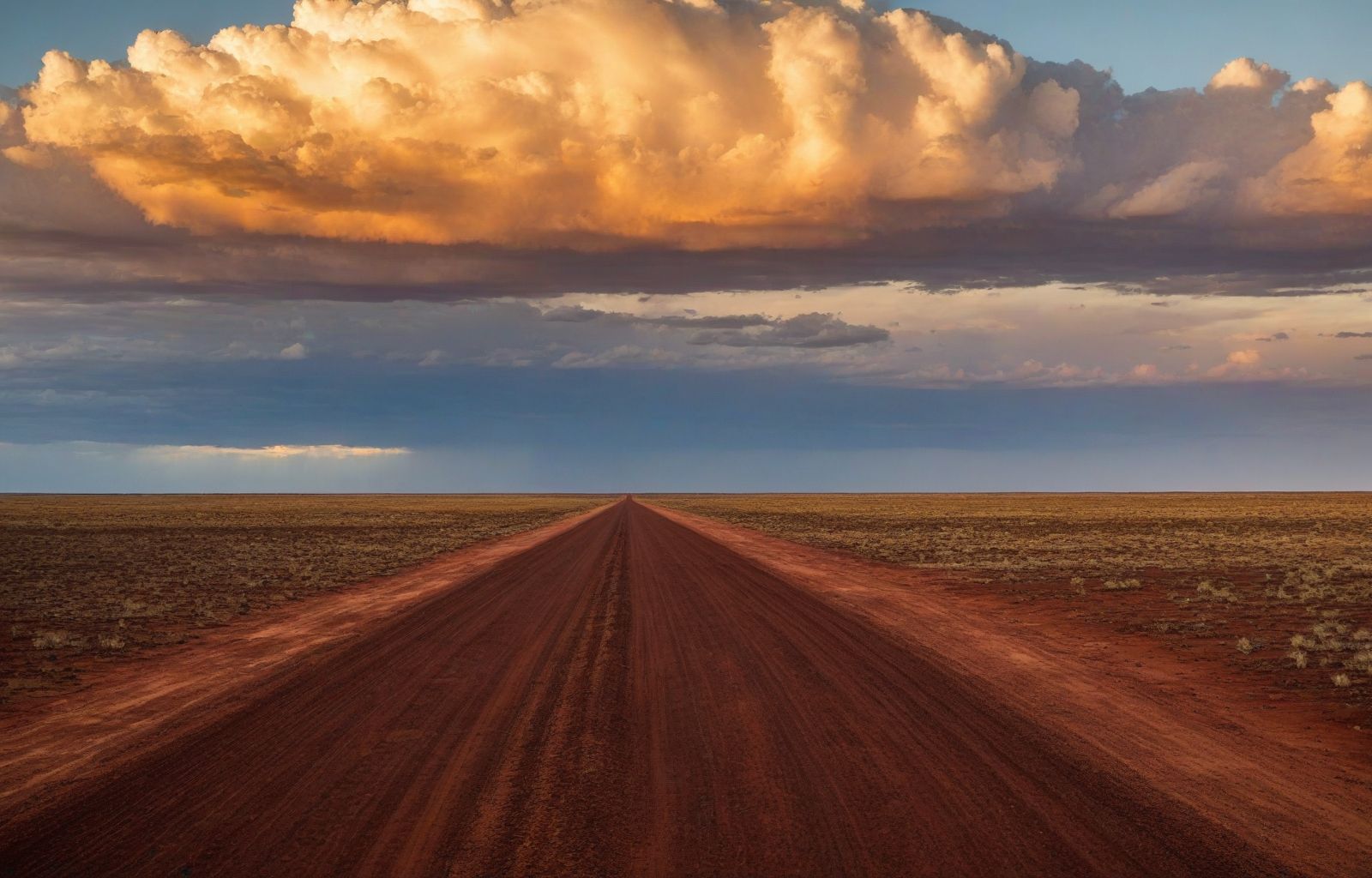
Among underrated Australian films, Indigenous cinema faces a compounded version of the same distribution failure. Australian distributors and exhibitors have a category for films that engage seriously with First Nations experience, and that category is “culturally significant,” which functions as a way of saying “for a particular audience” rather than any audience.
Ivan Sen’s Goldstone (2016) is the clearest example. Sen, whose father is from the Murrawarri nation, shot the film in far western Queensland, in country so vast it operates as its own character. The film is a neo-noir: unhurried and formally precise, following Detective Jay Swan through a mining town where the violence is administrative before it turns physical. It received strong reviews and won multiple AACTAs. The release that followed was so limited it functioned less as distribution than as notification.
Goldstone is a thriller, and it works as one. Genre competence should have been its commercial case. Instead, distributors absorbed it into the “culturally significant” frame and handled it accordingly: a short run in a small number of screens, then the streaming library most viewers never search deliberately.
Sen’s earlier Toomelah (2011) took the same path. That film documented a NSW community with a formal rigour that drew early comparisons to observational documentary, and it found almost no cinema screens. Both films are worth finding. Getting to them requires more effort than the films deserve.
Where to watch now
SBS On Demand is the first place to look. Australia’s free streaming service has a stronger commitment to domestic cinema than the subscription platforms, and several films from this list cycle through its catalogue. Stan carries a reasonable back catalogue of Australian titles. MUBI programmes Australian cinema with more curatorial intent than most, though its rotation means a title present today may be gone in a month.
For the harder-to-find titles, Kanopy is worth knowing about. Funded through public library networks, it carries films that commercial platforms won’t touch, which makes it an accidental archive for exactly the kind of work discussed in this article. A library card gets you in. Screen Australia’s research into streaming catalogues shows how little domestic content the major platforms actually carry, which explains why the library service ends up doing so much of the work.
Some films will require a rental through Apple TV or Google Play. A handful have never made it to streaming and survive on DVD. That a group of underrated Australian films from the past two decades is most reliably found through a library card says more about the system than about the films.
Closing
These are not obscure films. Several won awards, earned strong reviews, screened at international festivals. Their invisibility in the streaming era is not a reflection of their quality, and it is not a reflection of what Australian audiences will or won’t watch. It reflects the economics of a distribution system that was never built to carry mid-budget Australian drama into sustained, findable release. The underrated Australian films on this list are worth the effort of finding them. The more useful question, once you’ve watched a few, is why the effort should be required at all.
Opinion only. This article represents the author’s critical analysis and opinion, based on engagement with the work discussed. All quoted material is used for the purposes of criticism and review under fair dealing provisions. Views expressed are those of the author and do not represent the position of Shared Interest Blog on the works, artists, or organisations discussed.
Frequently Asked Questions
Why haven't most people heard of these films?
Distribution. The Australian theatrical market rewards franchises and tentpoles, and mid-budget local films get two or three weeks across a handful of screens before being pulled. A film that opens to modest numbers rarely gets the chance to build word of mouth, which is how smaller films find their viewers. Streaming has not fixed this. Australian content on the major platforms skews toward prestige television, and film catalogues remain patchy. Filmmakers delivered the films. Nobody built the distribution infrastructure to match, and the gap between production and access has been consistent ever since.
Where can I actually watch Australian films that aren't in cinemas?
Stan has the strongest catalogue of Australian film on any local streaming service. SBS On Demand is patchy but worth checking, and its curatorial instincts run toward the less commercially obvious. MUBI rotates Australian titles through its library, though availability shifts monthly. The National Film and Sound Archive has its own streaming platform with a growing collection of older titles, some of which have not surfaced elsewhere digitally. For specific films, local library systems often hold physical copies, because DVD access to Australian cinema remains more reliable than digital access for a surprising number of titles.
Isn't Australian cinema quite small-scale by nature?
The evidence says otherwise. Films like Picnic at Hanging Rock, Lantana, and The Babadook reached international audiences because they were singular works that those audiences responded to once they had access. The issue has never been that Australian filmmakers aim too locally, or that Australian stories lack international resonance. The pipeline from production to international distribution has always been under-resourced. Screen Australia funds production well. Getting those films in front of overseas audiences has been the neglected end of the equation for decades.
Is this a distribution problem unique to Australia?
Canada has the same structural problems and produces similar results: a recognisable body of work that struggles to circulate commercially alongside American product. But Australia has specific features that sharpen the issue. The theatrical market skews toward imported content, leaving limited screen time for local mid-budget films. The funding model creates pressure toward prestige projects rather than commercial risk-taking. Australia's geographic position means distribution logistics carry costs that do not apply to industries closer to their major export markets. At the policy level, these problems have been named and discussed for years; the structural response has not matched the diagnosis.